
Cart
0
0.00 €
A structured pathway for young people aged 16 and over and adults who want to learn, consolidate or develop their instrumental skills through clear objectives, continuous guidance and certification.
Students understand the objectives of each stage, monitor their progress and build a coherent musical pathway.
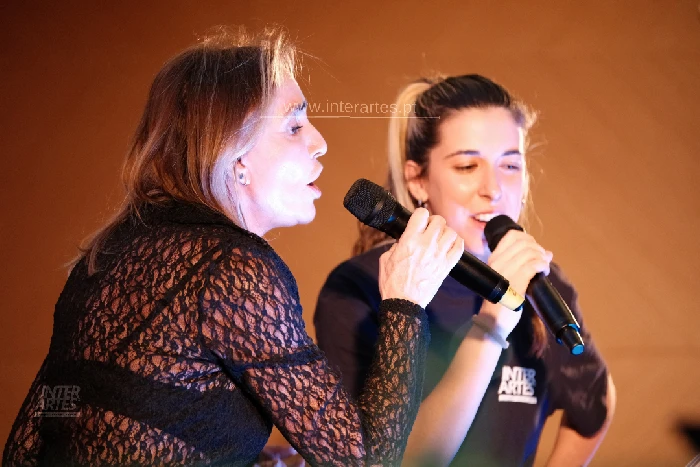
The Interartes Instrument Course follows a structured methodology aligned with the principles of DGERT-certified training. It combines technical development, music theory, ensemble practice and individual artistic growth.
The pathway adapts to each student’s starting point, maturity and pace of development. An initial assessment identifies the appropriate level and establishes realistic training objectives.
This model continues a teaching tradition spanning more than 50 years, inspired by the foundational work of Jorge Lee and grounded in rigour, creativity, musical integration and close guidance.
Available instruments: piano, guitar, bass, drums, voice, violin and other bowed strings, saxophone, flute, woodwinds, brass and others, subject to availability.
Instrumental development remains central. As students progress, the course integrates music reading, listening, ensemble work, musical culture and technology.
Technique, reading, interpretation, repertoire, expression and the development of independent study skills.
Theory, reading, harmony and musical understanding, always connected to instrumental practice.
Melodic, rhythmic and harmonic perception, musical memory and the ability to respond to what is heard.
Ensemble practice from the intermediate levels onwards, focusing on listening, interaction, repertoire and performance.
Stylistic context and, at advanced levels, an introduction to recording, editing and music production.
The pathway brings together technique, listening, repertoire and performance. Skills acquire meaning when they are applied on the instrument and shared with other musicians.
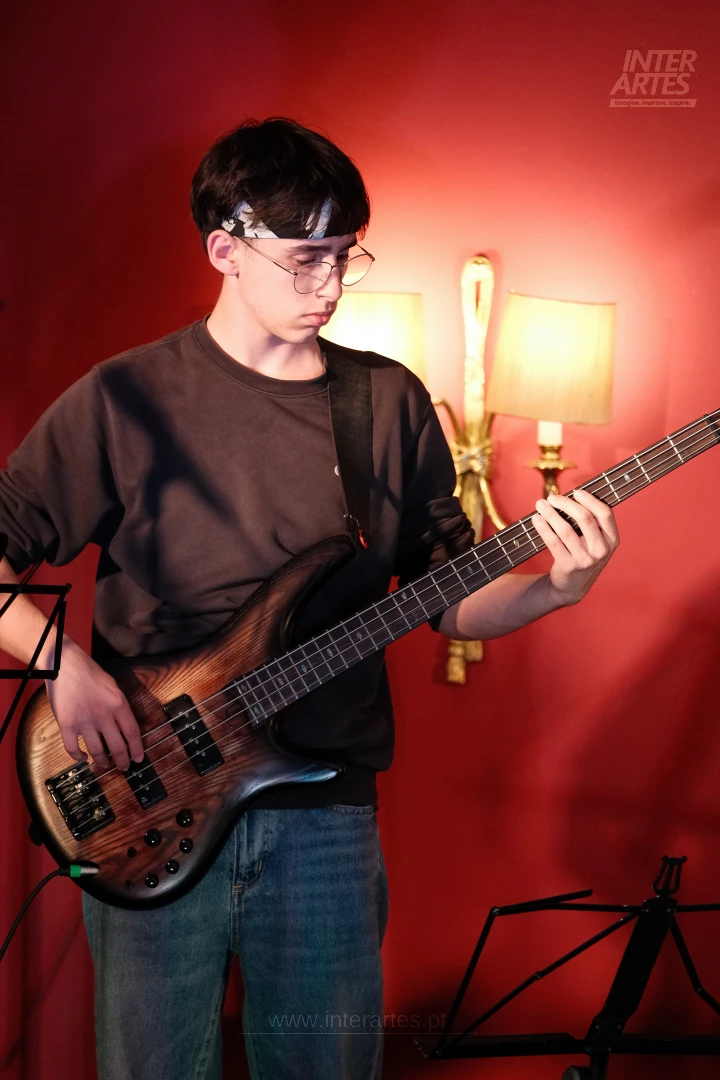
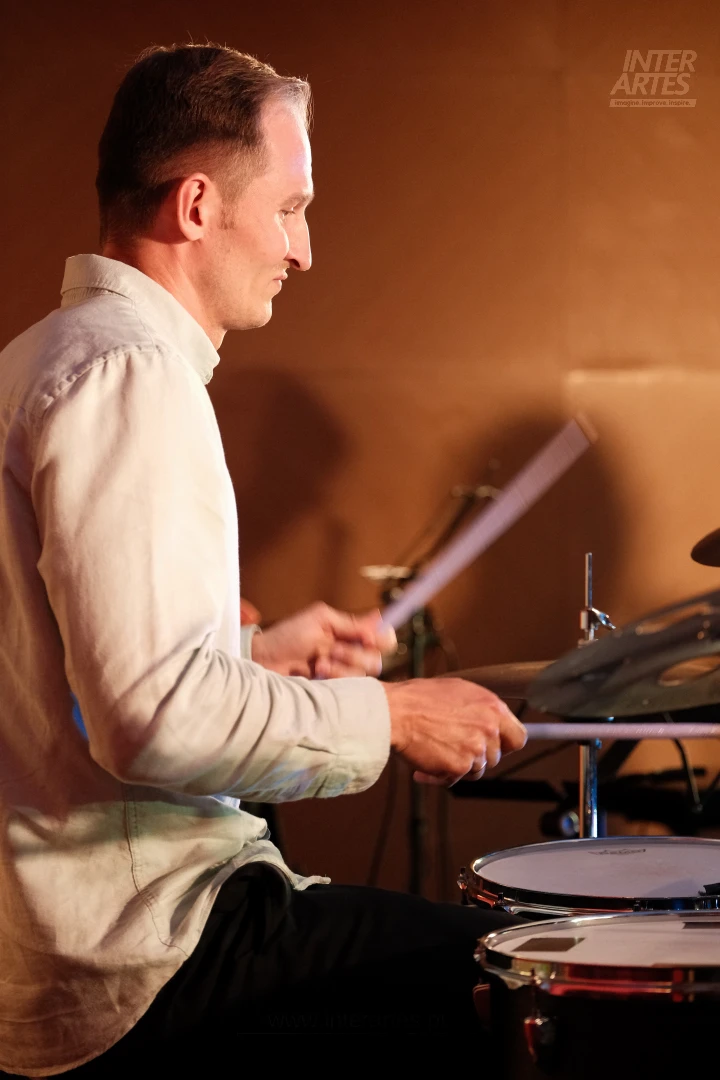
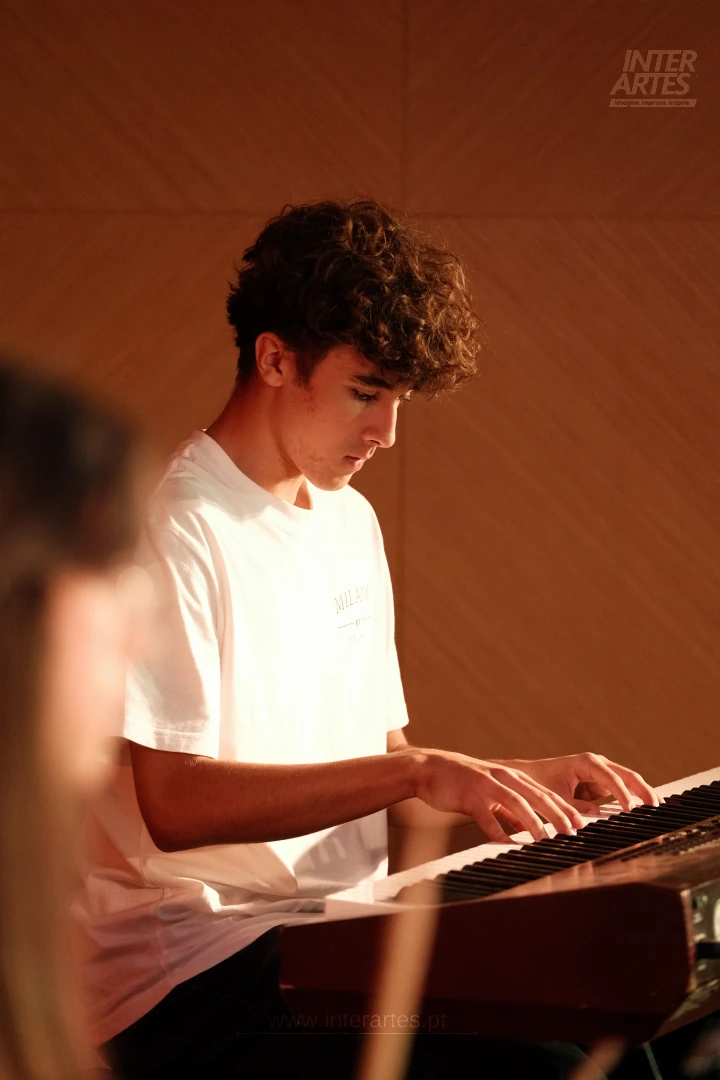
Each level establishes goals, content and experiences suited to the student’s stage of development.
First experiences with the instrument, music reading, rhythm, coordination, short pieces and a final performance.
Reference workload:
18 instrument lessons + 2 music theory lessons.
Technical and expressive consolidation, repertoire development, scales, arpeggios and introductory improvisation.
Reference workload:
18 instrument lessons + 2 music theory lessons.
Introduction to ensemble practice, deeper listening skills and musical application of theoretical content.
Reference workload:
16 instrument lessons + 2 combo/ensemble sessions + 1 music theory lesson + 1 ear-training session.
Consolidation of the chosen musical language, interpretation, interaction and greater artistic independence.
Reference workload:
16 instrument lessons + 2 combo/ensemble sessions + 1 music theory lesson + 1 ear-training session.
Advanced technical and interpretative work, demanding repertoire, music technology, historical context and a recital.
Reference workload:
Instrument, combo, music theory, ear training, music history, technology and recital.
* Levels I to IV may be completed over two semesters when the workload, the student’s maturity or the consolidation of skills makes this advisable.
An established approach, updated through current training standards, artistic practice, technology and individual guidance.
Defined objectives, progressive content and clear criteria for understanding development at every stage.
Lessons are organised around concrete goals, with teaching plans available for consultation.
Music reading, harmony, ear training and music history are applied to repertoire and instrumental practice.
Performances, auditions, recitals and group projects serve as milestones of progress.
Discipline, creativity, communication, confidence, listening and teamwork.
The pathway respects each student’s pace without compromising the defined objectives and skills.
Assessment is continuous and formative. At the end of each level, a practical and theoretical summative component confirms the consolidation of content and guides progression.
Technical, expressive, artistic and theoretical development monitored throughout the course.
Auditions, recitals and group projects provide performance experience and evidence of progress.
Successful completion confirms the pathway followed and the skills acquired.
Certification delivered within the training system of a DGERT-certified provider.
No. A brief initial assessment allows students to enter the level that matches their experience, knowledge and musical skills.
Levels I to IV normally last one semester, but may be completed over two semesters when additional time is needed to consolidate skills. Level V runs over two semesters.
Yes. Progression depends on attendance, commitment, independent work and the consolidation of skills. The decision is made jointly by the teacher and the academic coordination team.
The course is available for piano, guitar, bass, drums, voice, bowed strings, woodwinds, brass and other instruments, subject to availability. The pathway may focus on classical, jazz or pop-rock repertoire.
Instrument lessons are primarily one-to-one. Music theory, ear training, combo and ensemble sessions may take place in small groups, depending on the level and academic organisation.
Assessment is continuous and formative throughout the semester. Each level also includes a final assessment with practical and theoretical components suited to the content covered.
Yes. Successful completion leads to the issue of a certificate confirming the pathway completed and the skills acquired within the framework of DGERT-certified training.
Yes. The pathway includes auditions, recitals, performances and group projects. Ensemble practice becomes part of the programme from the intermediate levels onwards.
Individual lessons may last 30 or 50 minutes, depending on the agreed plan. Schedules are arranged with the teacher, taking into account the student’s availability and room capacity.
Absences must be communicated in advance. The possibility of a replacement lesson depends on the reason, the applicable terms and the trainer’s availability.
Yes. Detailed content for each level and the corresponding teaching plans are available from the Interartes office.
Contact us to discuss your objectives, instrument, availability and entry level. The Interartes team will help define the most suitable pathway.